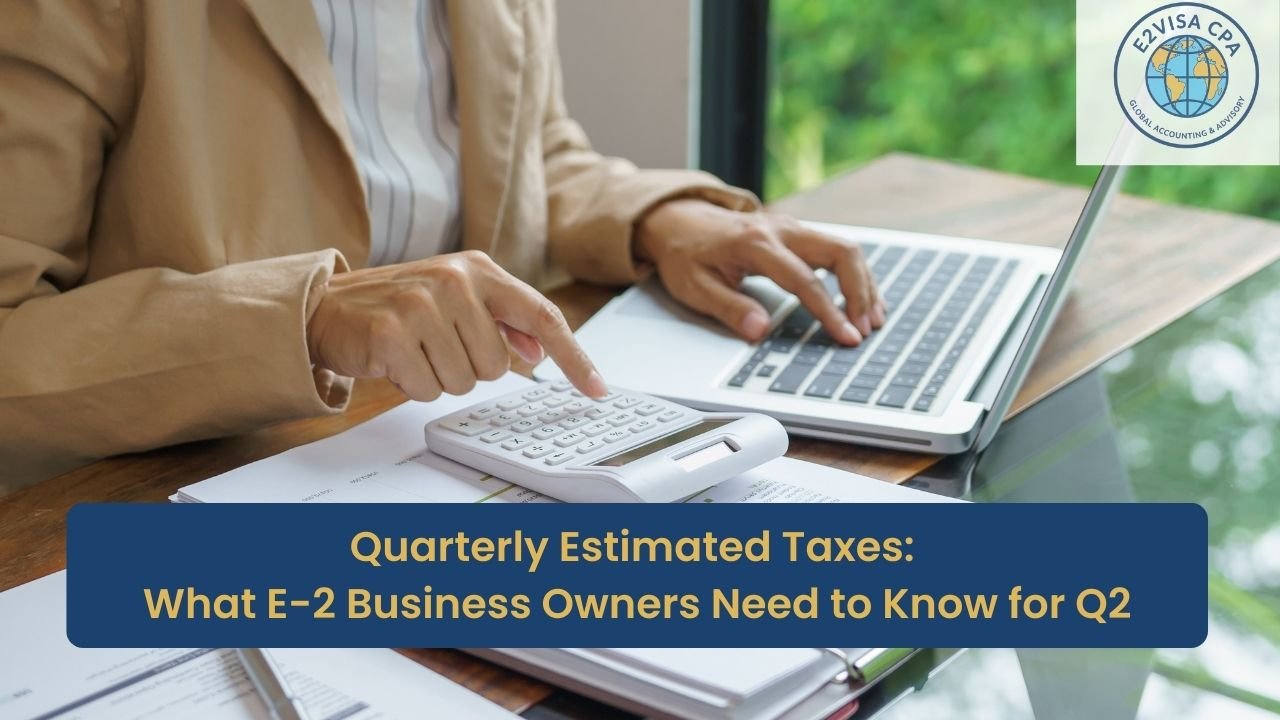
Operating a business in the United States under an E-2 visa involves ongoing tax obligations, including the requirement to pay quarterly estimated taxes. As the second quarter approaches, E-2 business owners must understand how these payments work to remain compliant and avoid penalties.
This guide explains the key aspects of Q2 estimated taxes, including who must pay, how to calculate payments, and strategies to manage tax liability effectively.
What Are Quarterly Estimated Taxes?
Quarterly estimated taxes are periodic payments made to the IRS on income that is not subject to automatic withholding. E-2 visa entrepreneurs typically earn income through business profits rather than wages, making estimated tax payments necessary.
These payments generally cover:
- Federal income tax
- Self-employment tax
- State and local taxes, if applicable
The U.S. tax system operates on a pay-as-you-go basis, meaning taxes must be paid throughout the year rather than in a single annual payment.
Q2 Estimated Tax Deadline
The deadline for second-quarter estimated tax payments is typically June 15. If this date falls on a weekend or holiday, the deadline may shift to the next business day.
Missing the deadline may result in:
- Underpayment penalties
- Accrued interest
- Increased financial burden later in the year
Timely payments are essential for maintaining compliance.
Who Needs to Pay Estimated Taxes?
E-2 business owners are generally required to make quarterly estimated tax payments if:
- They expect to owe at least $1,000 in federal taxes for the year
- Their income is not subject to withholding
- They operate as sole proprietors, partners, or shareholders in S corporations
Even first-year business owners must evaluate whether estimated payments are required based on projected income.
How to Calculate Q2 Estimated Taxes
Accurate calculation of estimated taxes is critical. The following steps can help:
Estimate Annual Income
Project total income for the year based on current business performance.
Determine Total Tax Liability
Calculate expected federal income tax and self-employment tax. Include state taxes where applicable.
Divide Into Quarterly Payments
Split the total estimated tax into four equal payments unless income varies significantly throughout the year.
Safe Harbor Rule
The IRS provides a safe harbor rule to help taxpayers avoid penalties for underpayment. You may avoid penalties if you pay:
- At least 90 percent of your current year’s total tax liability, or
- 100 percent of your previous year’s tax liability (110 percent for higher-income taxpayers)
This method can be useful if income fluctuates or is difficult to predict.
Common Mistakes to Avoid
Underestimating Income
Business growth or seasonal fluctuations can lead to underpayment if estimates are not updated.
Overlooking Self-Employment Tax
Self-employment tax can significantly increase total tax liability and should be included in all calculations.
Missing Payment Deadlines
Late payments may result in penalties even if the full amount is eventually paid.
Failing to Adjust Payments
Quarterly estimates should be reviewed and adjusted based on actual income throughout the year.
Tax Planning Strategies for Q2
Review Financial Performance
Analyze first-quarter results to refine income projections and adjust Q2 payments accordingly.
Track Deductible Expenses
Maintain accurate records of business expenses, including travel, office costs, and professional services, to reduce taxable income.
Maintain a Tax Reserve
Setting aside 25 to 30 percent of income for taxes can help ensure funds are available when payments are due.
Seek Professional Guidance
Working with a tax professional experienced with E-2 visa requirements can help ensure compliance and optimize tax outcomes.
How to Make Estimated Tax Payments
Estimated tax payments can be made through several methods:
- IRS Direct Pay
- Electronic Federal Tax Payment System (EFTPS)
- Credit or debit card payment providers
Always retain proof of payment for recordkeeping and compliance purposes.
Importance of Compliance for E-2 Visa Holders
For E-2 visa business owners, tax compliance is closely tied to both financial and immigration considerations. Proper tax management supports:
- Accurate financial reporting
- Business credibility
- Long-term operational stability
Consistent compliance also demonstrates that the business is active and properly managed.