Running a business in the U.S. on an E-2 visa comes with unique tax opportunities and responsibilities. One of the most powerful ways E-2 visa business owners can legally reduce their U.S. tax liability is through depreciation and business write-offs.
Understanding what expenses qualify, how depreciation works, and how to document deductions properly is critical not only for IRS compliance, but also for maintaining clean financials for E-2 visa renewals.
This guide explains how depreciation and write-offs for E-2 visa businesses and how to use them strategically.
What Are Business Write-Offs?
A business write-off is an expense that can be deducted from your business income, reducing your taxable profit. For E-2 visa holders, write-offs must be:
- Ordinary (common in your industry)
- Necessary (helpful and appropriate for your business)
- Properly documented
Common Write-Offs for E-2 Visa Businesses
- Rent and utilities
- Employee wages and payroll taxes
- Marketing and advertising expenses
- Professional fees (CPA, legal, consulting)
- Business insurance
- Software subscriptions
- Travel expenses related to business
- Office supplies and equipment
Correctly claiming these deductions helps lower taxes while keeping your business financially sound.
What Is Depreciation?
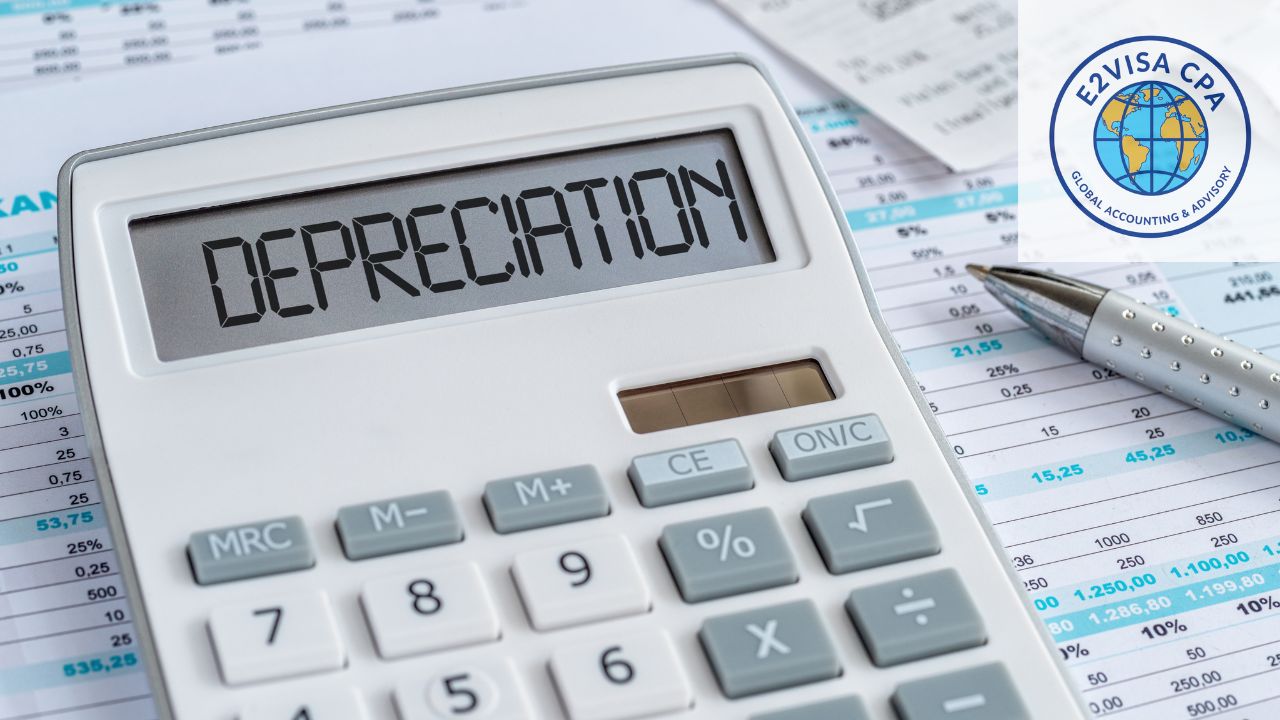
Depreciation allows you to deduct the cost of expensive assets over time instead of all at once. This is especially important for E-2 businesses that invest heavily in equipment or property.
Assets typically depreciated include:
- Machinery and equipment
- Computers and technology
- Furniture and fixtures
- Vehicles used for business
- Leasehold improvements
Depreciation spreads the tax benefit over the asset’s useful life, aligning deductions with how the asset generates income.
Section 179 & Bonus Depreciation (Key Tax Tools)
E-2 visa businesses may qualify for accelerated depreciation methods such as:
Section 179 Deduction
- Allows qualifying assets to be expensed immediately
- Useful for reducing taxable income in high-profit years
- Subject to annual limits and business income thresholds
Bonus Depreciation
- Allows a large percentage of asset cost to be deducted in the first year
- Often used alongside or instead of Section 179
- Rules can change based on tax law updates
Choosing the right method requires careful tax planning, especially for visa holders managing long-term business growth.
Why Depreciation & Write-Offs Matter for E-2 Visa Holders
For E-2 investors, tax strategy goes beyond savings:
- Clean books support E-2 visa renewals
- Accurate deductions reduce audit risk
- Proper reporting ensures IRS compliance
- Strong financials help demonstrate a viable business
Over-aggressive or incorrect deductions can raise red flags with both the IRS and immigration authorities.
Importance of Proper Documentation
The IRS requires clear records for every deduction and depreciated asset, including:
- Invoices and receipts
- Proof of business use
- Depreciation schedules
- Asset purchase dates and costs
For E-2 visa holders, poor documentation can lead to penalties, denied deductions, or complications during visa renewal reviews.
Work With an E-2 Visa CPA
Depreciation and write-offs should be planned not guessed. An E-2 Visa CPA ensures:
- Correct classification of expenses
- Maximum allowable deductions
- Compliance with U.S. tax laws
- Alignment with immigration requirements
Want to maximize tax savings while protecting your E-2 visa status?
Work with E2VisaCPA, specialists in U.S. tax planning, depreciation, and compliance for E-2 visa investors worldwide.
📞 Call: +1 832-848-5155
🌐 Visit: www.e2visacpa.com
Get expert guidance tailored to your visa, your business, and your future in the U.S.